05:00
Regime Shifts
Module 5: Systems theory and resilience thinking (BL8049)
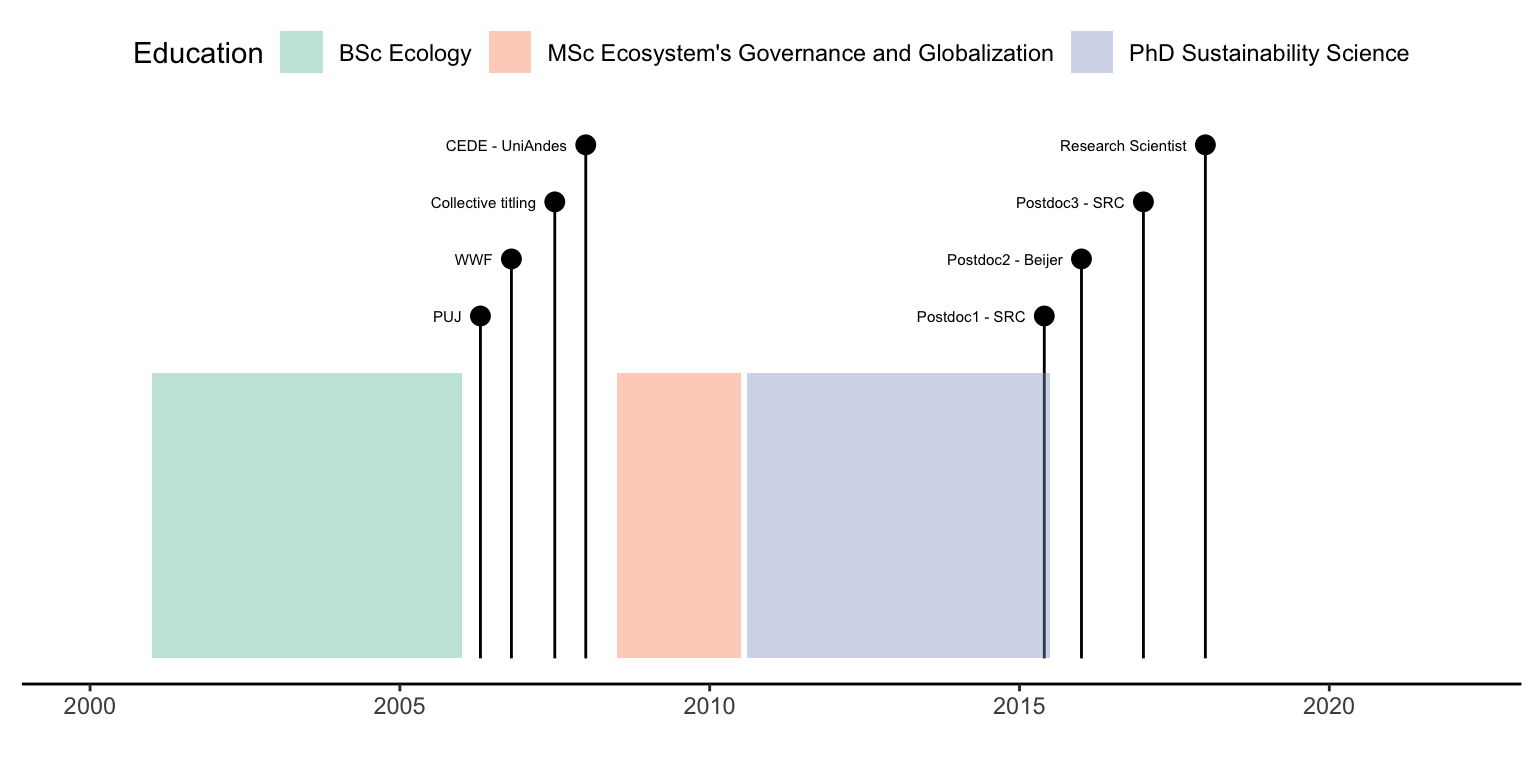
Studies
- Resiliencia Ecológica de la Pesquería Artesanal de Langosta Espinosa (Panulirus argus) en Providencia y Santa Catalina
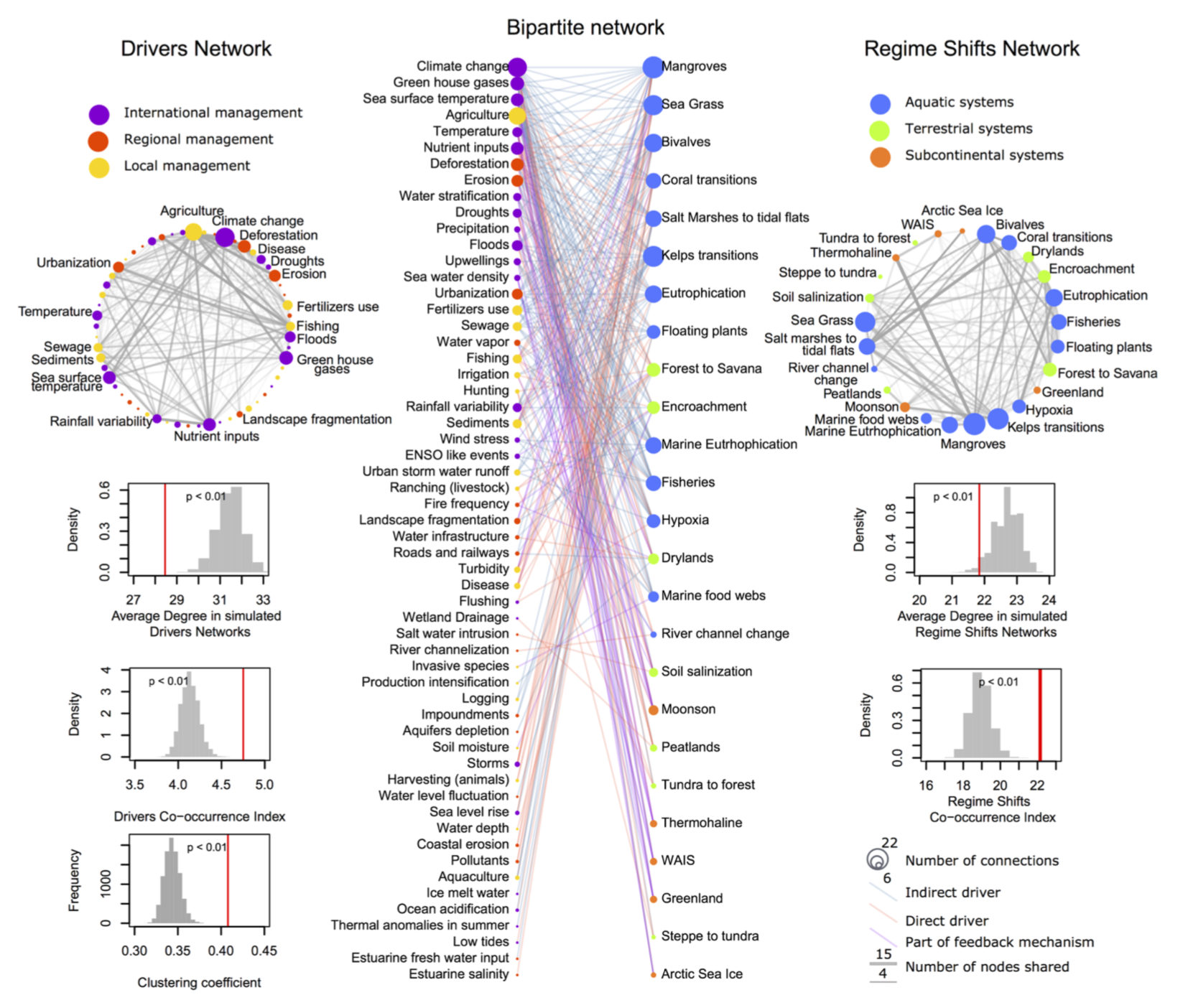
- The domino effect: a network analysis of regime shifts drivers and causal pathways
- Regime Shifts in the Anthropocene
Postdocs
- Targeting Agricultural Innovations (Ghana & Burkina Faso)
- Behavoural Experiments in Social-Ecological systems with Thresholds (Colombia)
- Cascading effects of regime shifts (SU, MIT & Princeton)
Resilience
- Henri Poincaré discovered bifurcations in 1886
- Bifucations (non-linear dynamics) are foundational to studies across natural, social sciences and humanities.
E.g poverty traps, segregation, evolution of cooperation, cancer, language, finance, climate, the states of matter, among many others. - In 1960-70s ecology: related to the meaning of stability and catastrophe theory
(Lewontin, MacArthur, Holling, Ludwig, Walters, Noy-Meir, May)
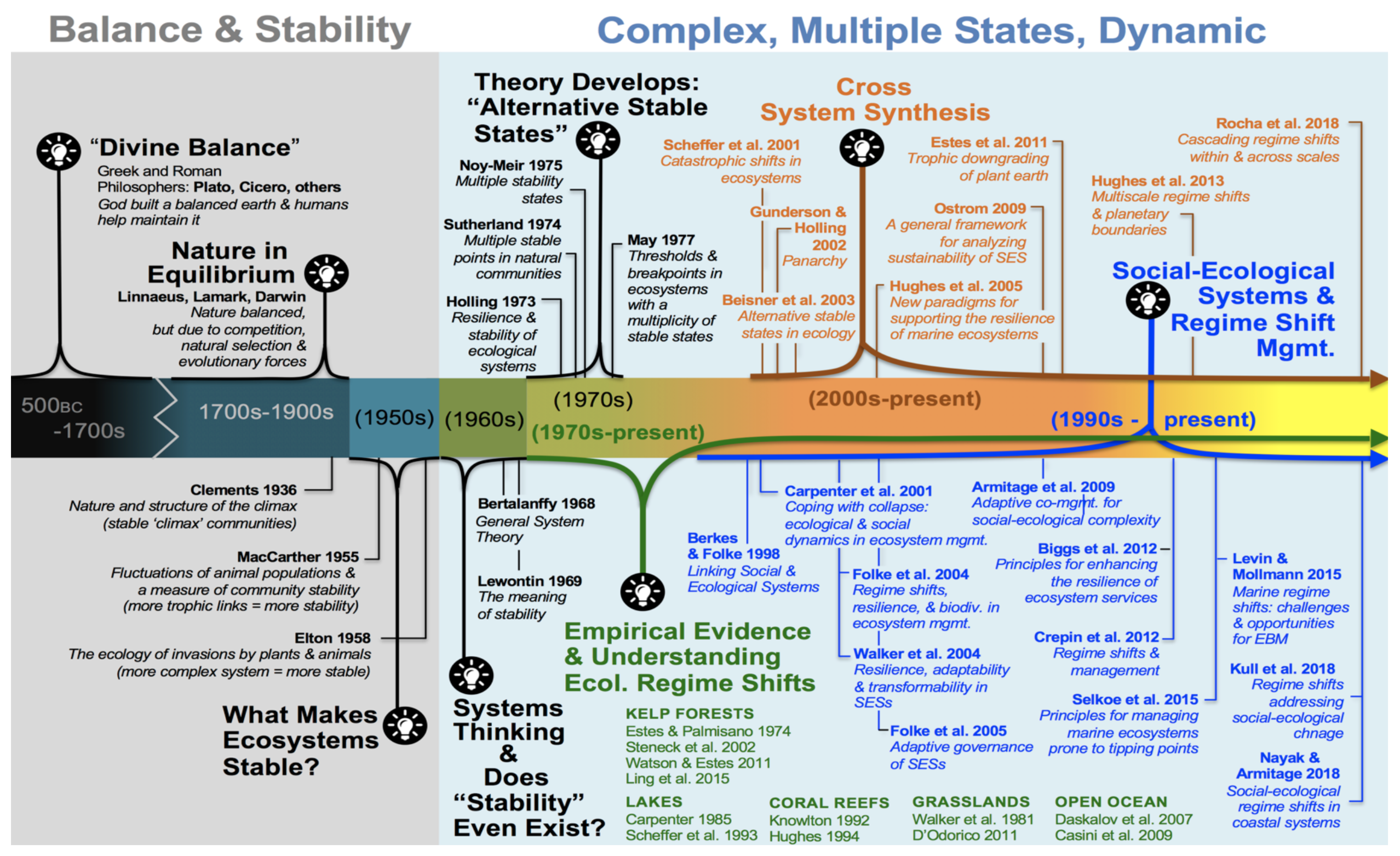
Source: Jenn Burt PhD Thesis
Hysteresis
“Hysteresis is the dependence of the state of a system on its history … rate-dependent hysteresis is a dynamic lag between inputs and ouptups” —Wikipedia
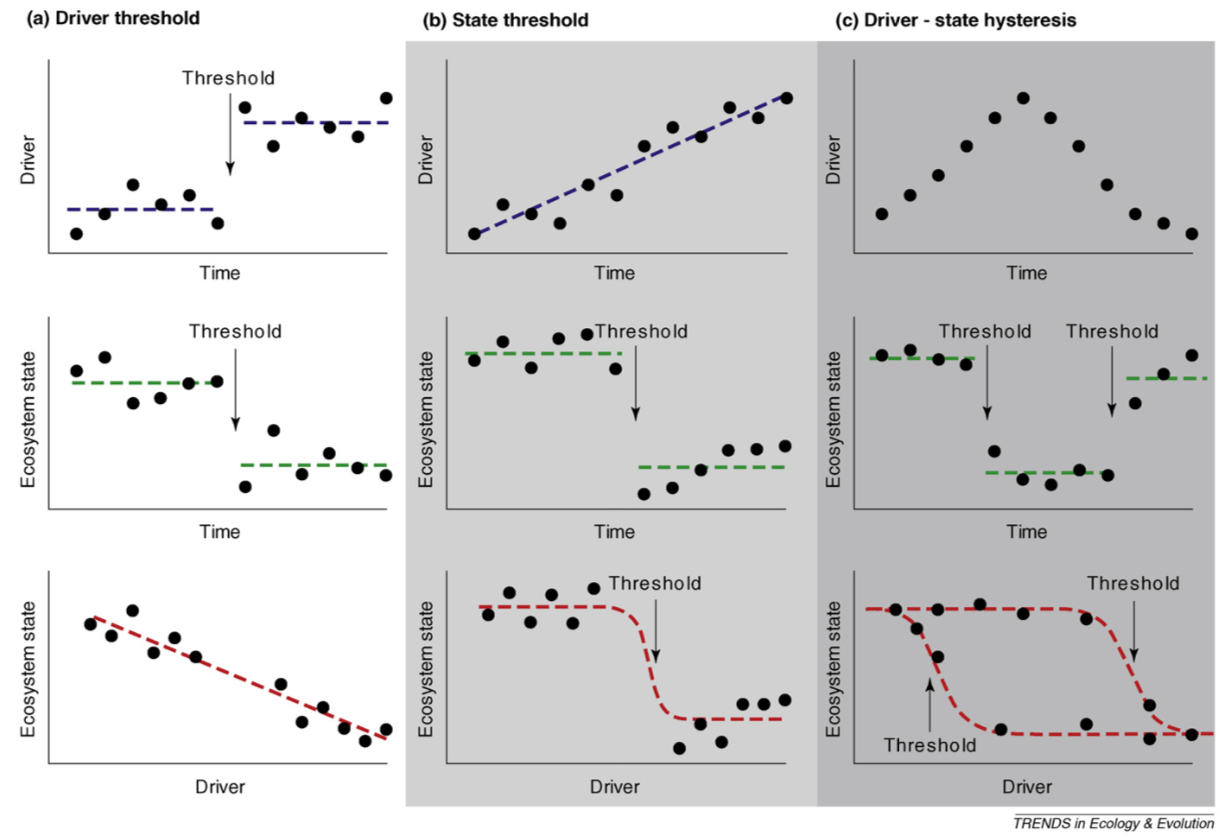
Andersen, J. et al. Trends Ecol Evol. (2009).
Abruptness affects the capacity to adapt to changes
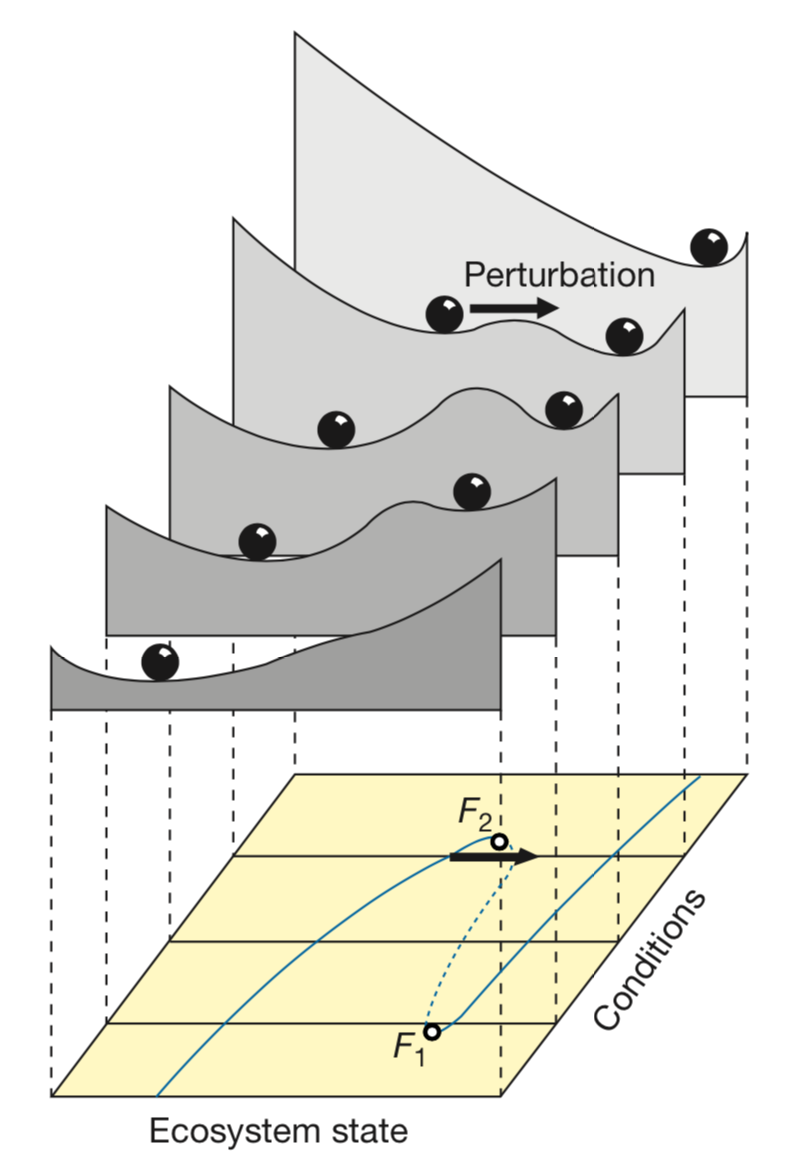
Regime shifts and resilience
Magnitude of change that a system can absorb without undergoing a regime shift
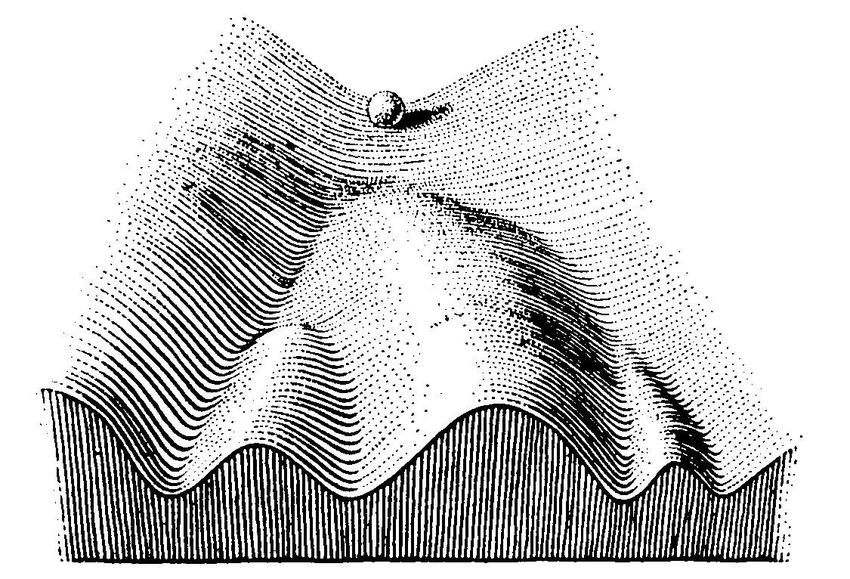
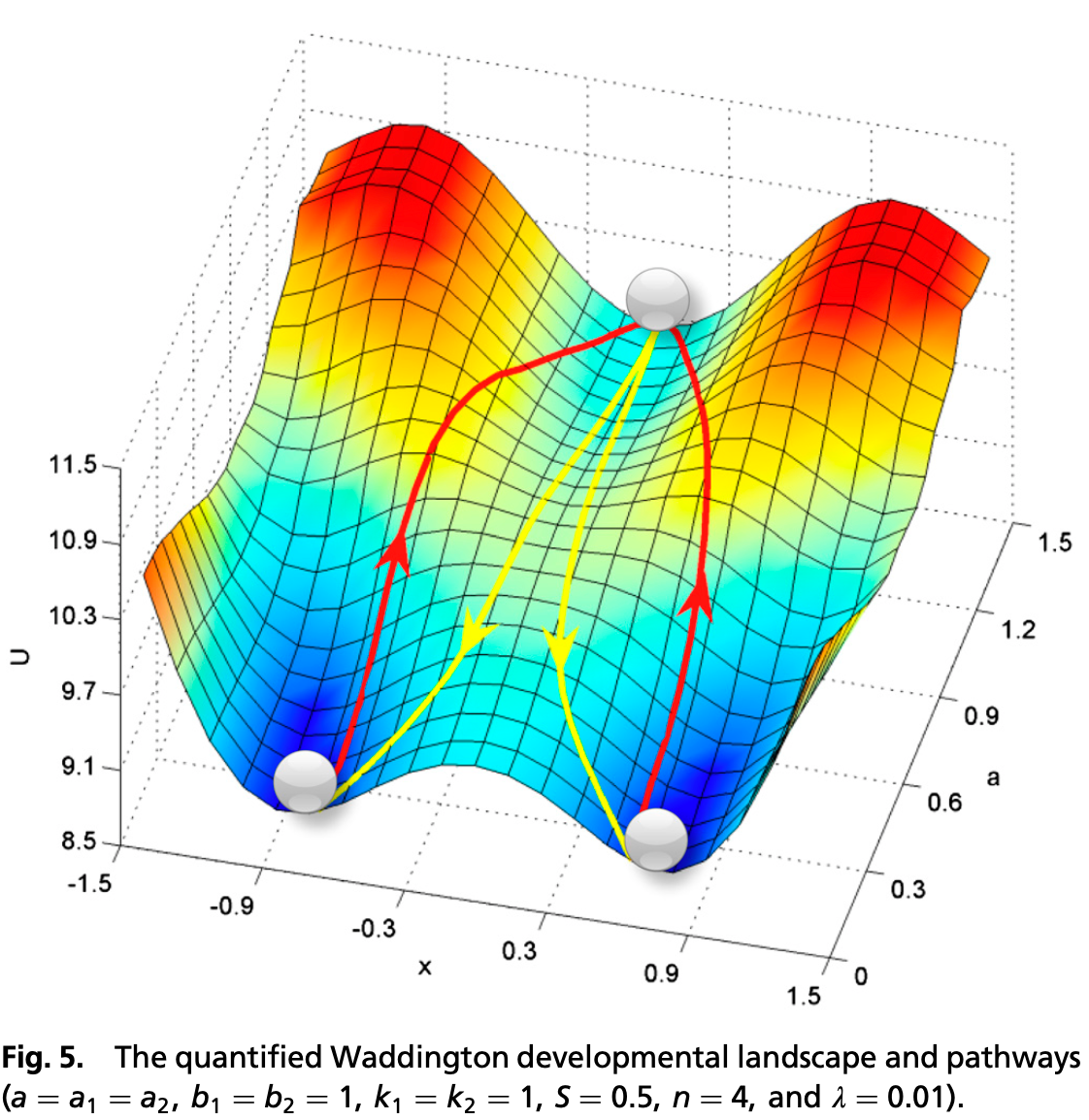
- Size of the basin of attraction
- Depth
- Slope
- Proximity to the boundary
- Property of the system or the regime (state variable)?
- Property of the disturbance?
- Resilience of what to what? for whom?
Holling C. 1973. Ann Rev Ecol Syst -> Clark, W 1975 IIASA
Menck et al 2013 NatPhys
Carpenter et al 2001 Ecosystems
Why are regime shifts important?
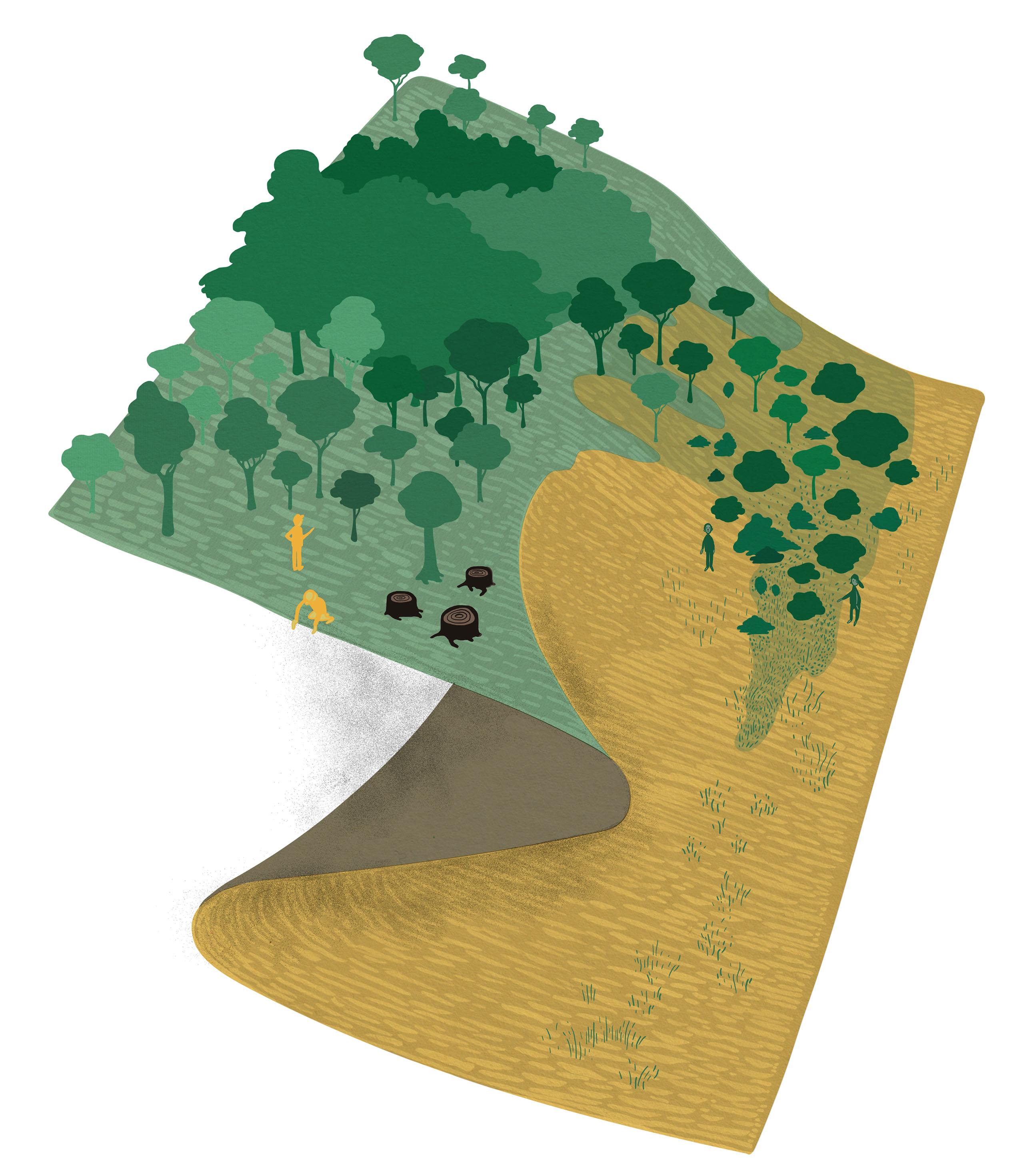
- Reduce the benefits people get from nature
- Difficult to anticipate and hard and costly to reverse
- Difficult (unethical) to perform experiments
- Often studied in isolation
- How do we compare them?
Biggs et al 2018 EcolSoc - What are their main drivers?
Rocha et al 2015 PlosONE - What are their main impacts?
Rocha et al 2015 PhilTransB
Back to theory: Where is the tipping point?
\[\frac{d🐠}{d⏱️}=🐠 \left( 1- \frac{🐠}{🌎} \right) - 🎣 \left( \frac{🐠^2}{🐠^2+1} \right)\]
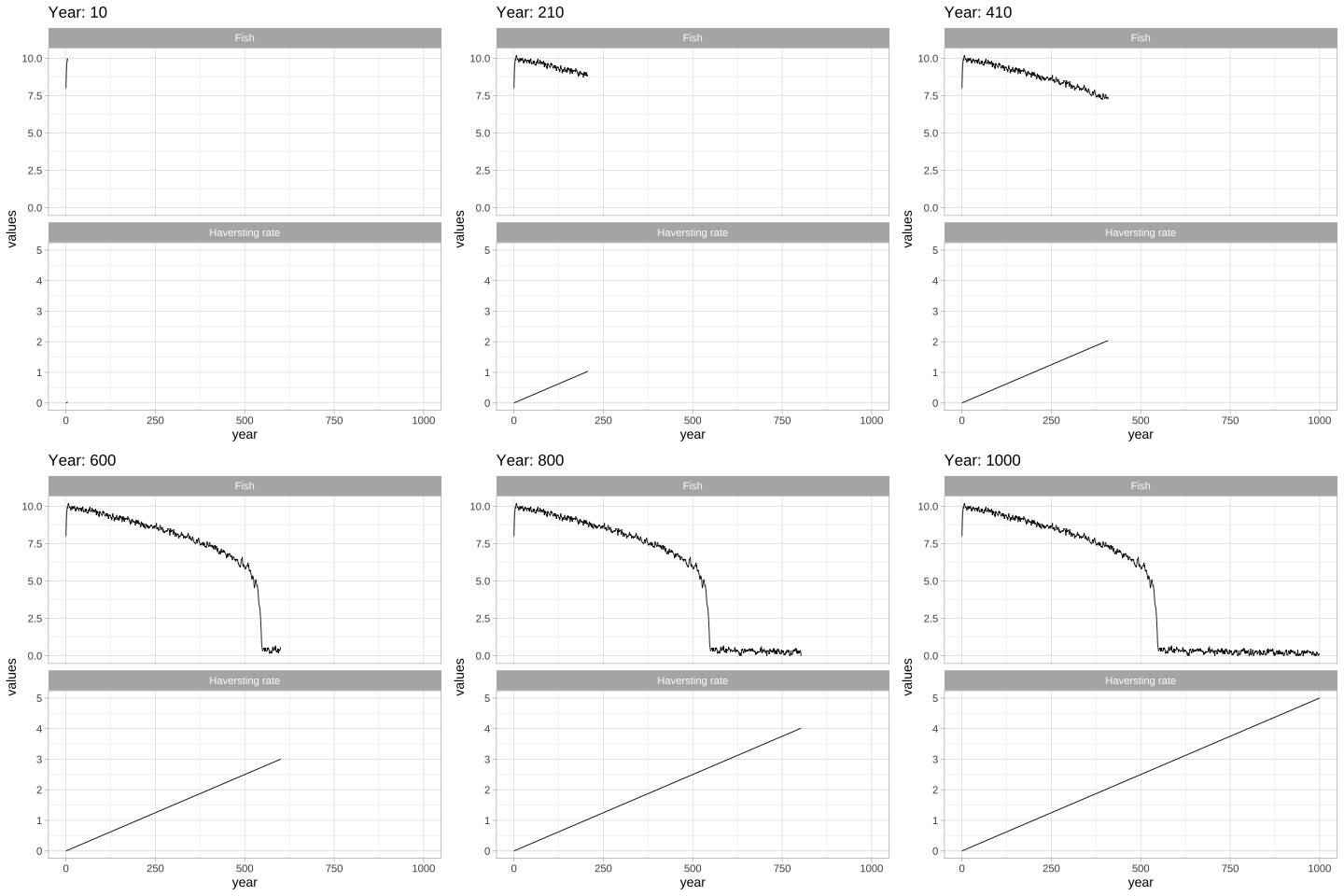
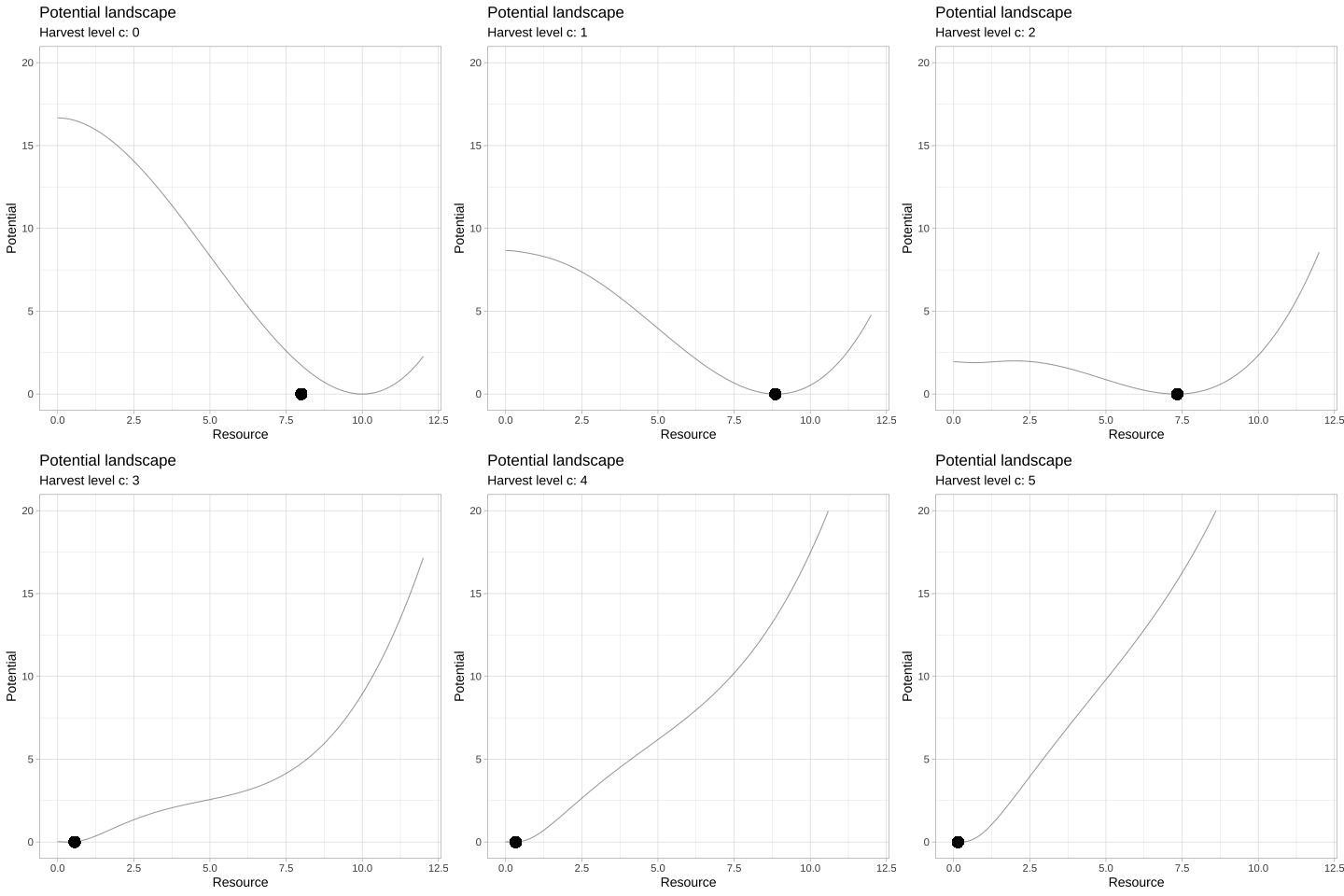
Where is the tipping point?
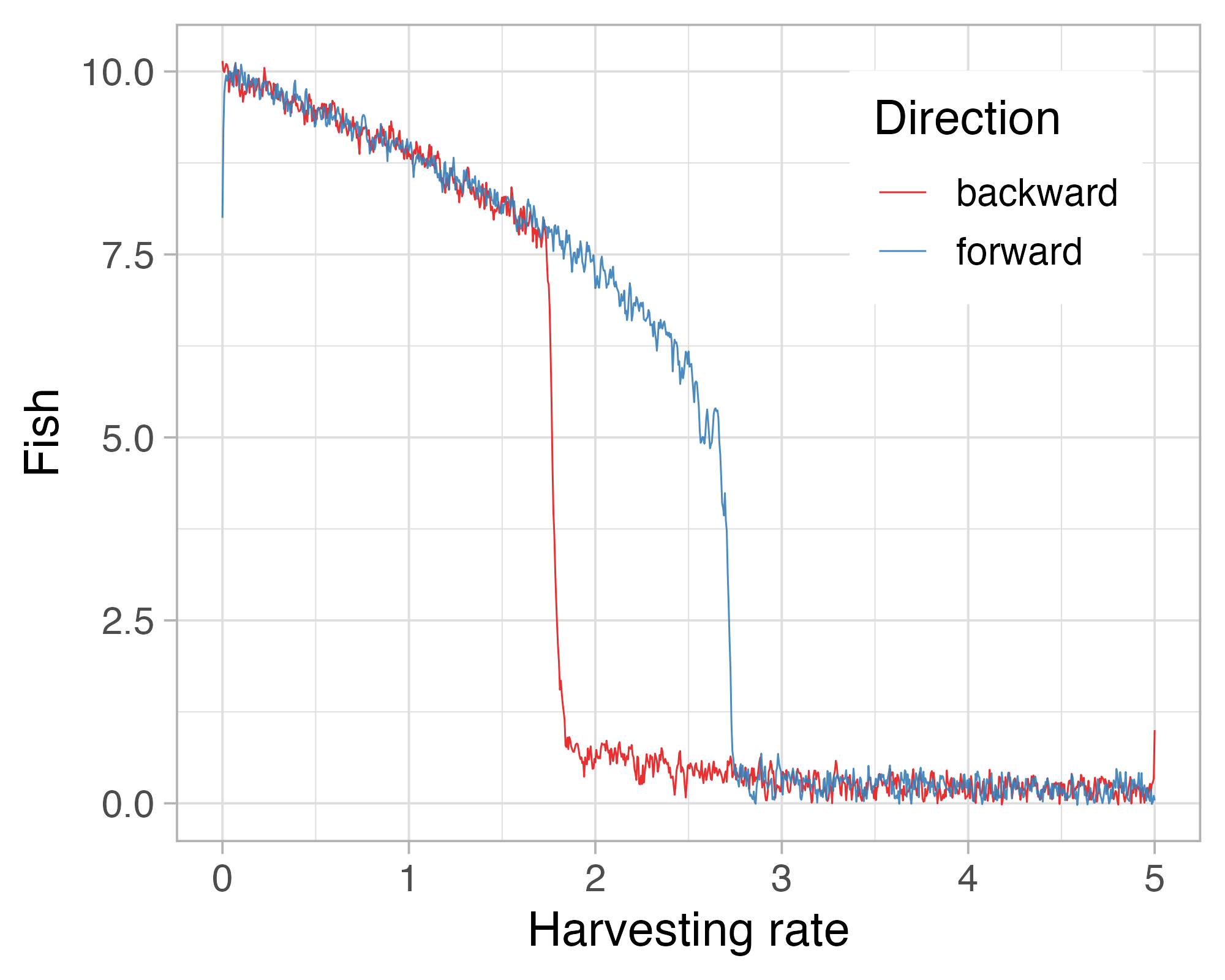
Tipping points
- Measurable and observable points at which the qualitative behaviour of the system changes
- Not people, nor events: history independent
- Clean to see in math, hard to see in the real noisy world
- Because hard to detect, some people do not find them useful e.g. Hillebrand et al 2020 NEE | Kopp et al 2024 NCC
Clarifications
- Tipping points are the points at which the system tips
- Theory vs Practice
- Threshold is the separatrix between basins of attraction
- Resilience is the size of the basin
- Its neither good or bad: depends on the observer
- e.g.: The mafia is resilient (good for drug consumers, bad for police & society)
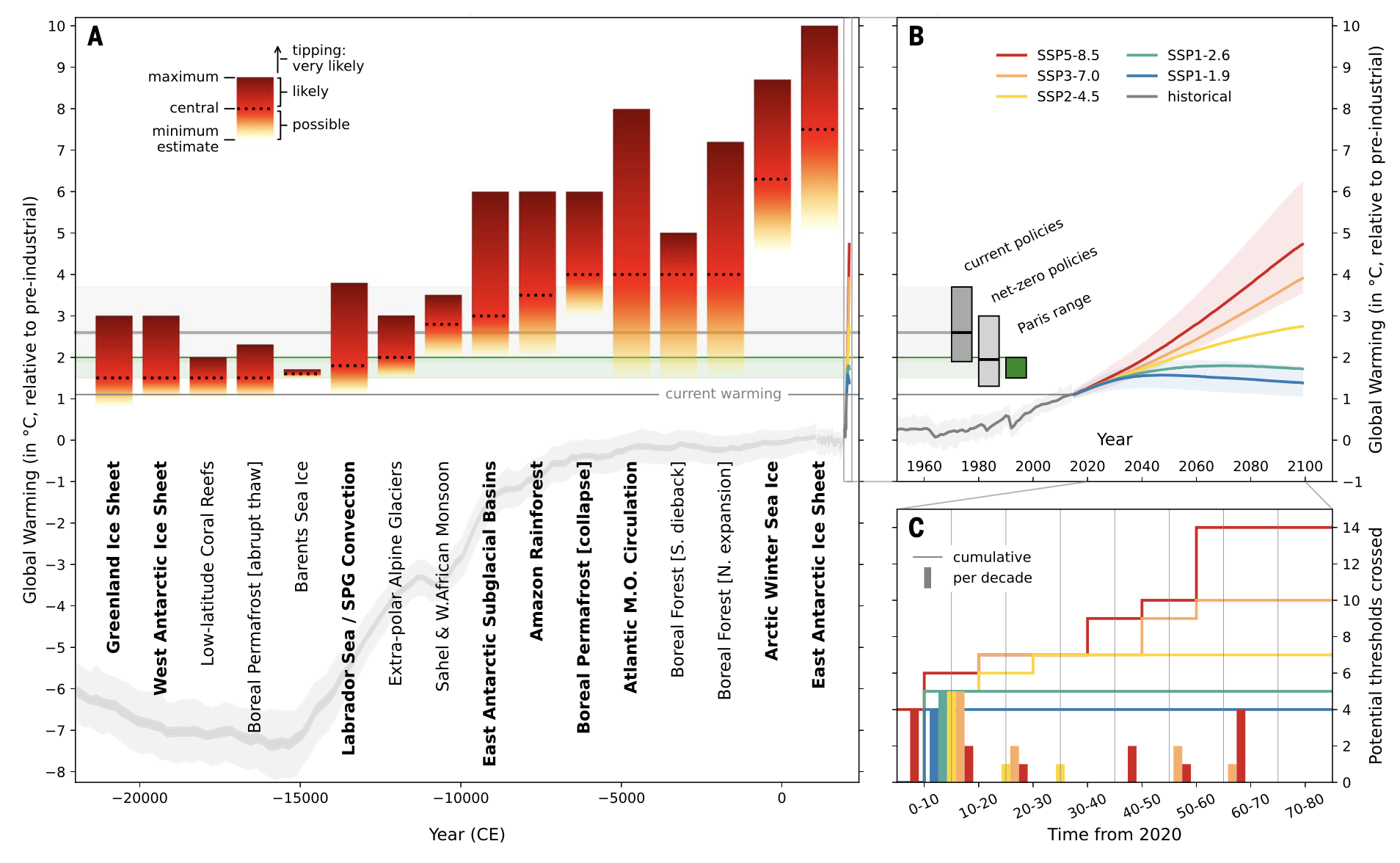
Climate tipping elements
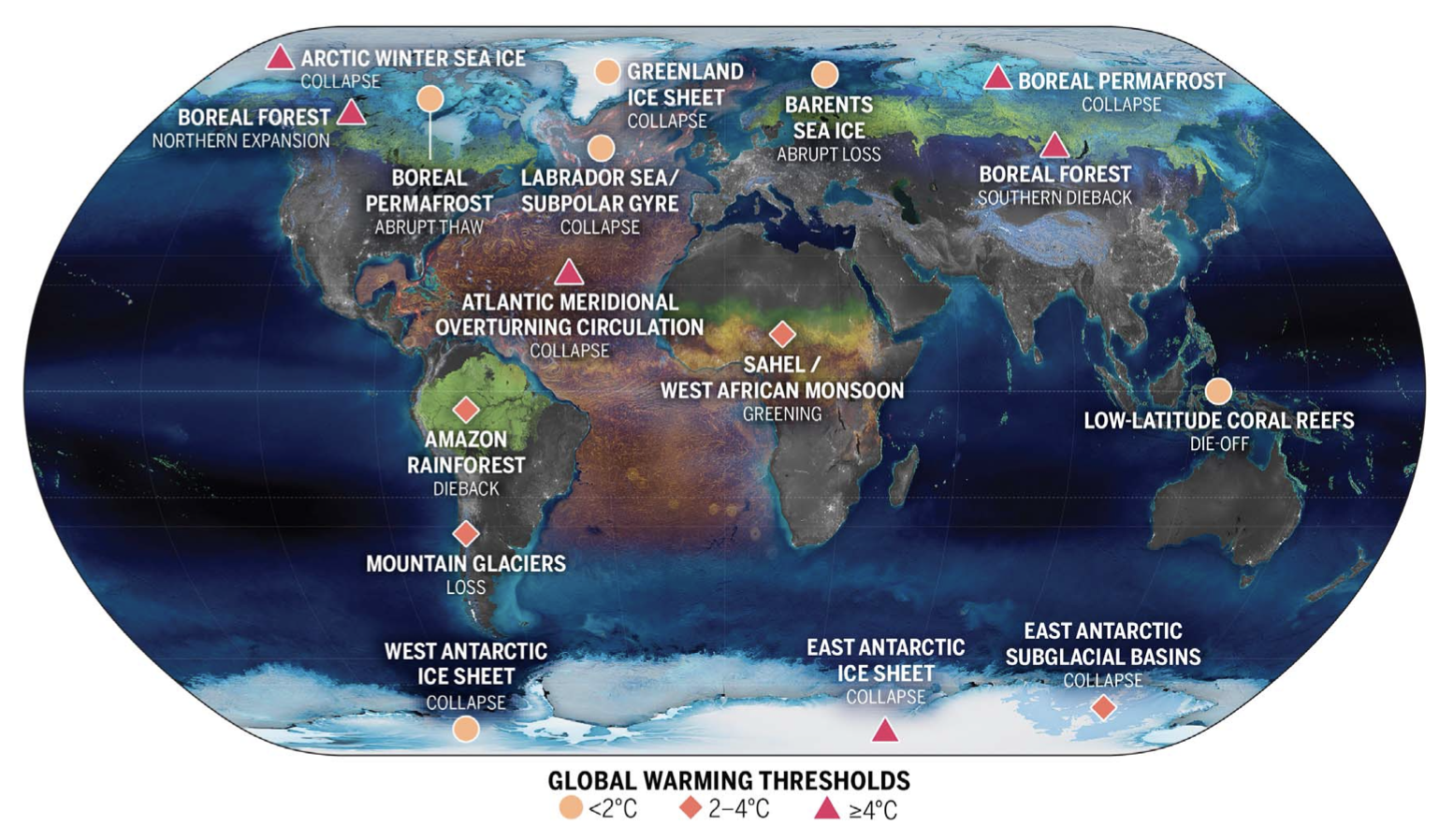
Climate tipping elements
Climate is not the only one
- Drivers are nested in non-random clusters
- Food production, climate change, and urbanization are the main drivers globally
- Targeting well studied drivers wont be enough to avoid regime shifts
Known tipping points
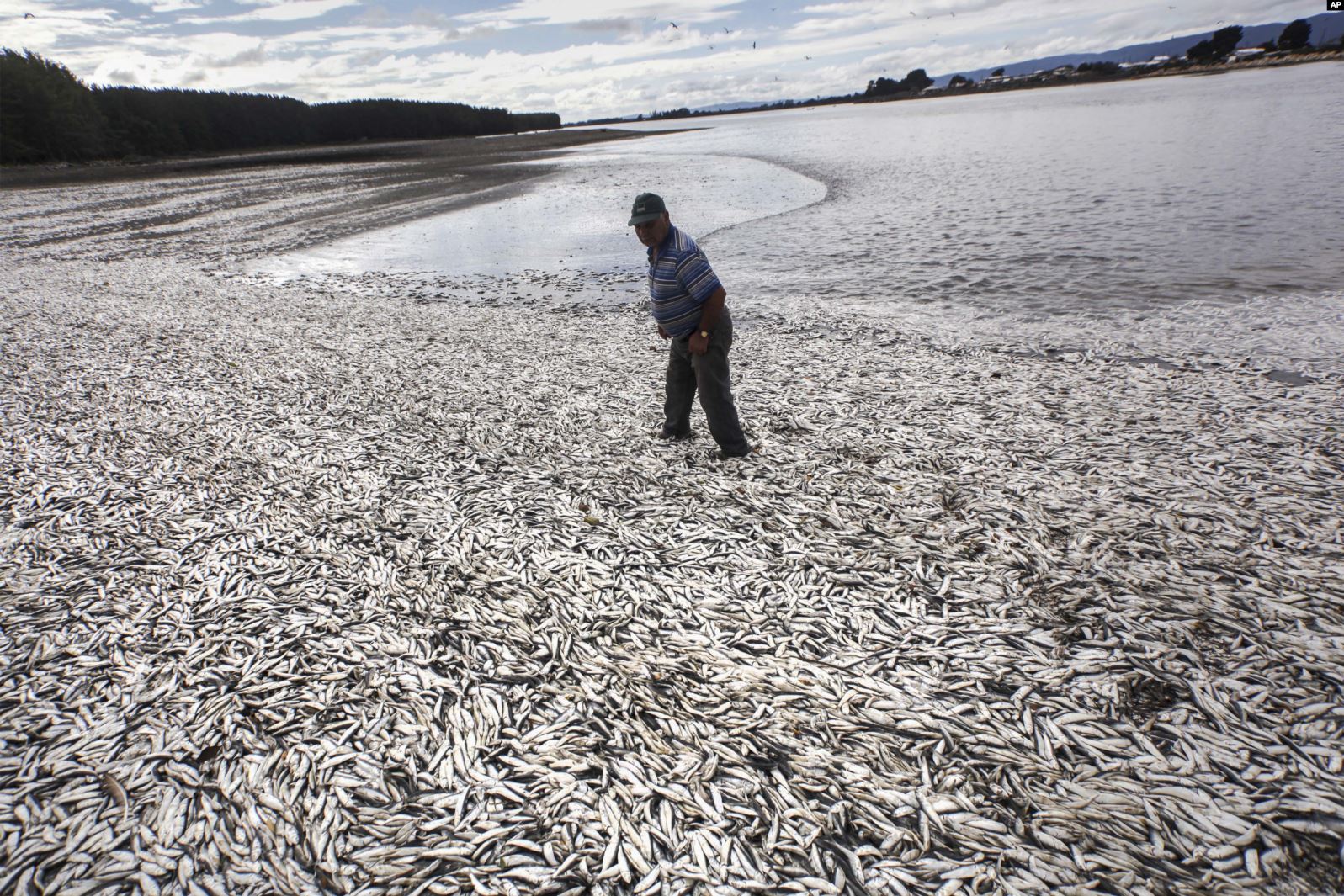
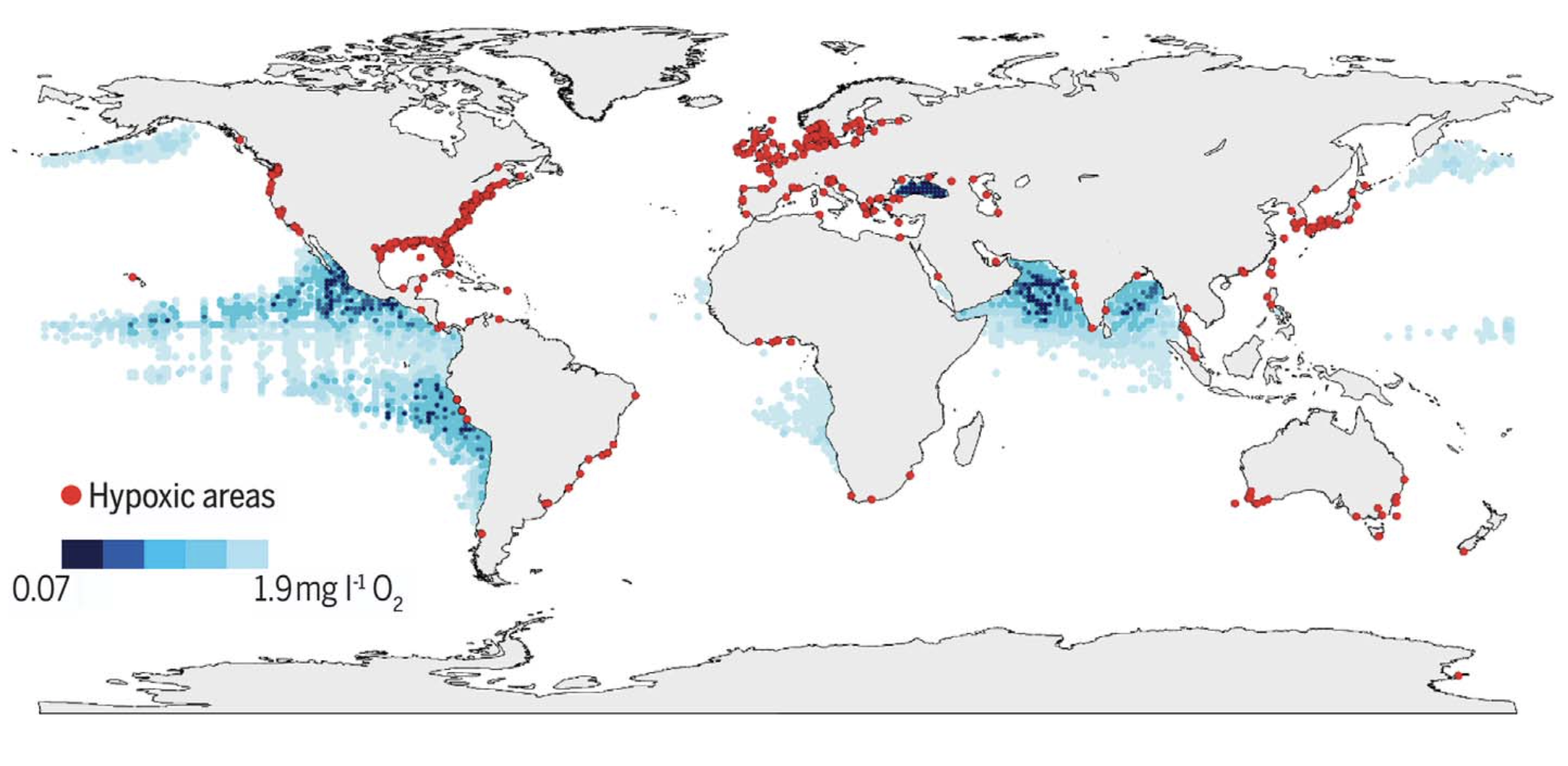
- Dissolved oxygen (\(ml O_2/L\))
- Normoxia: \(\gt 2 ml O_2/L\)
- Hypoxia: \(\le 2 ml O_2/L\)
- Anoxia: \(\lt 0.5 ml O_2/L\)
Known tipping points
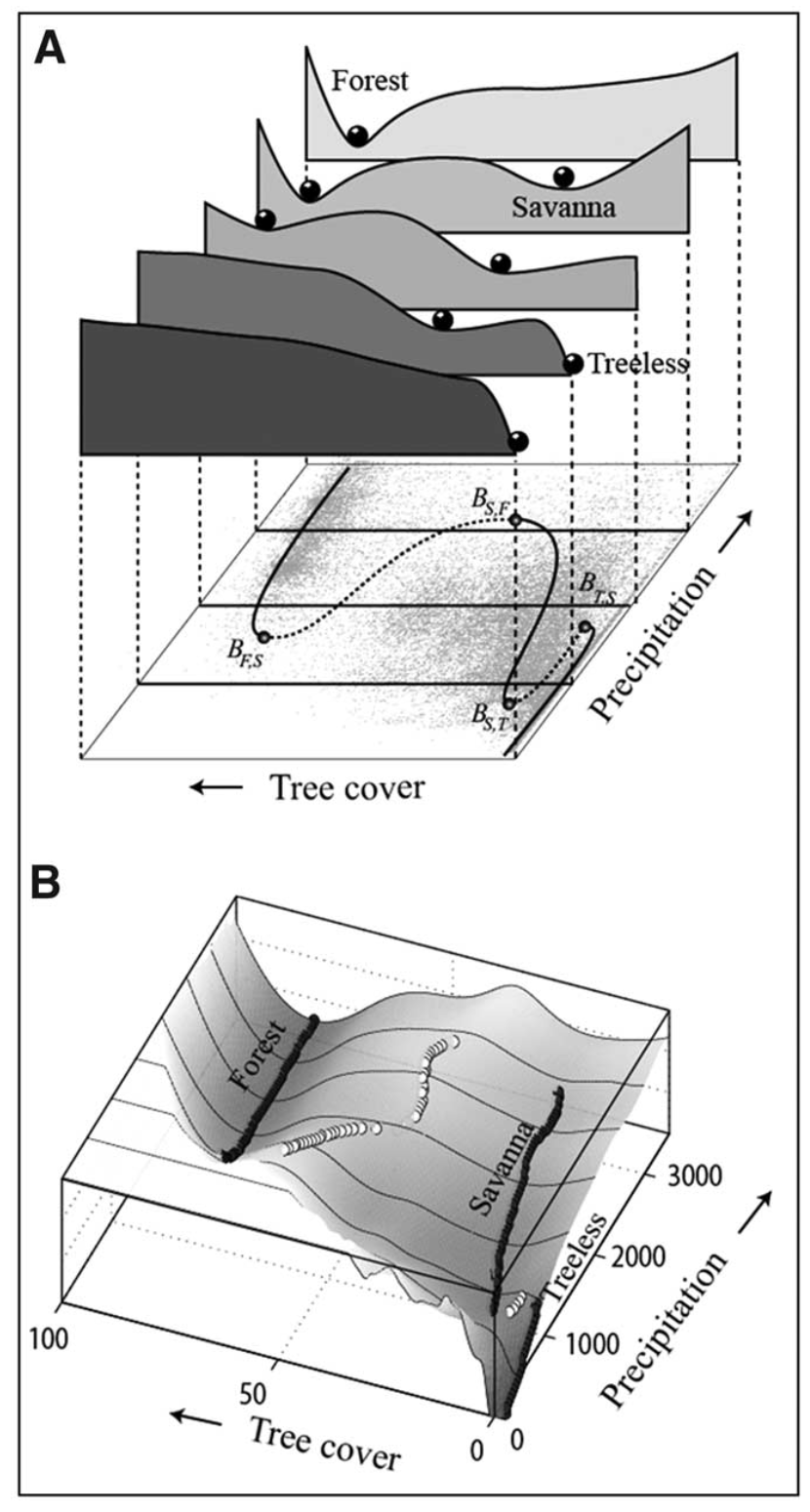
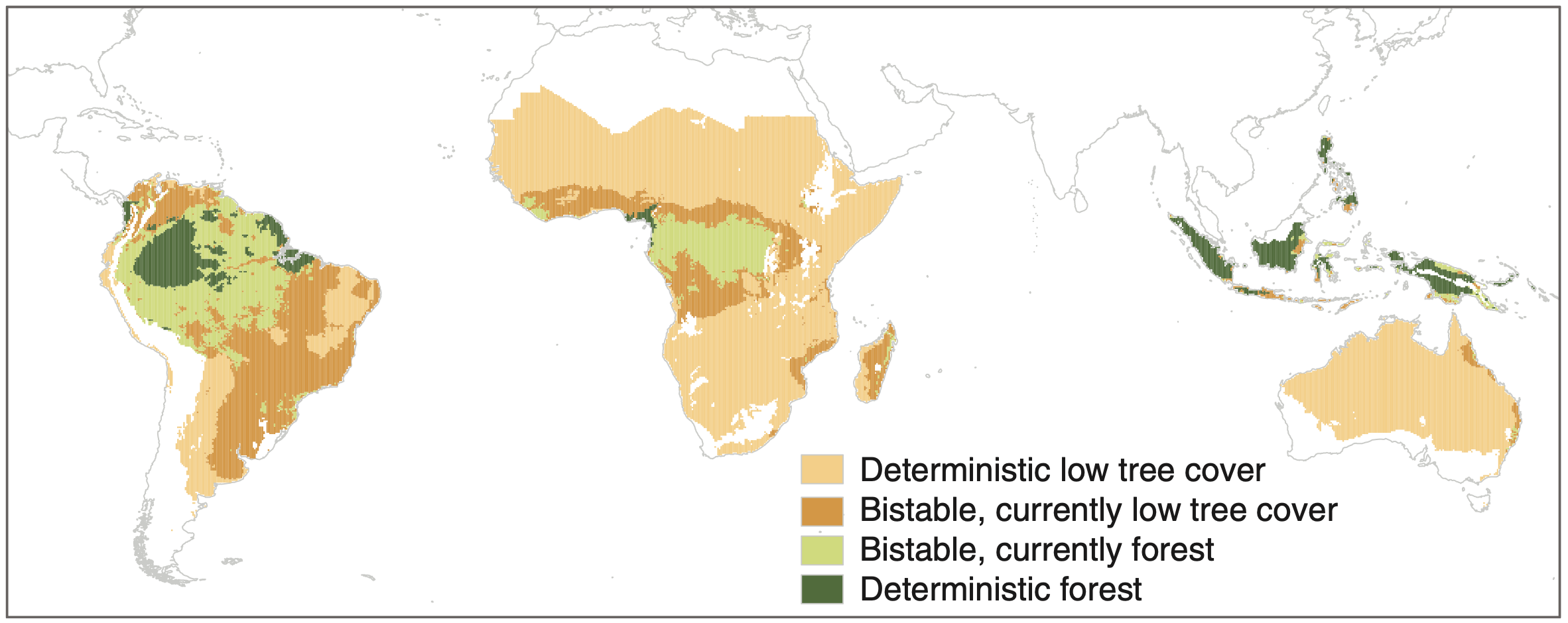
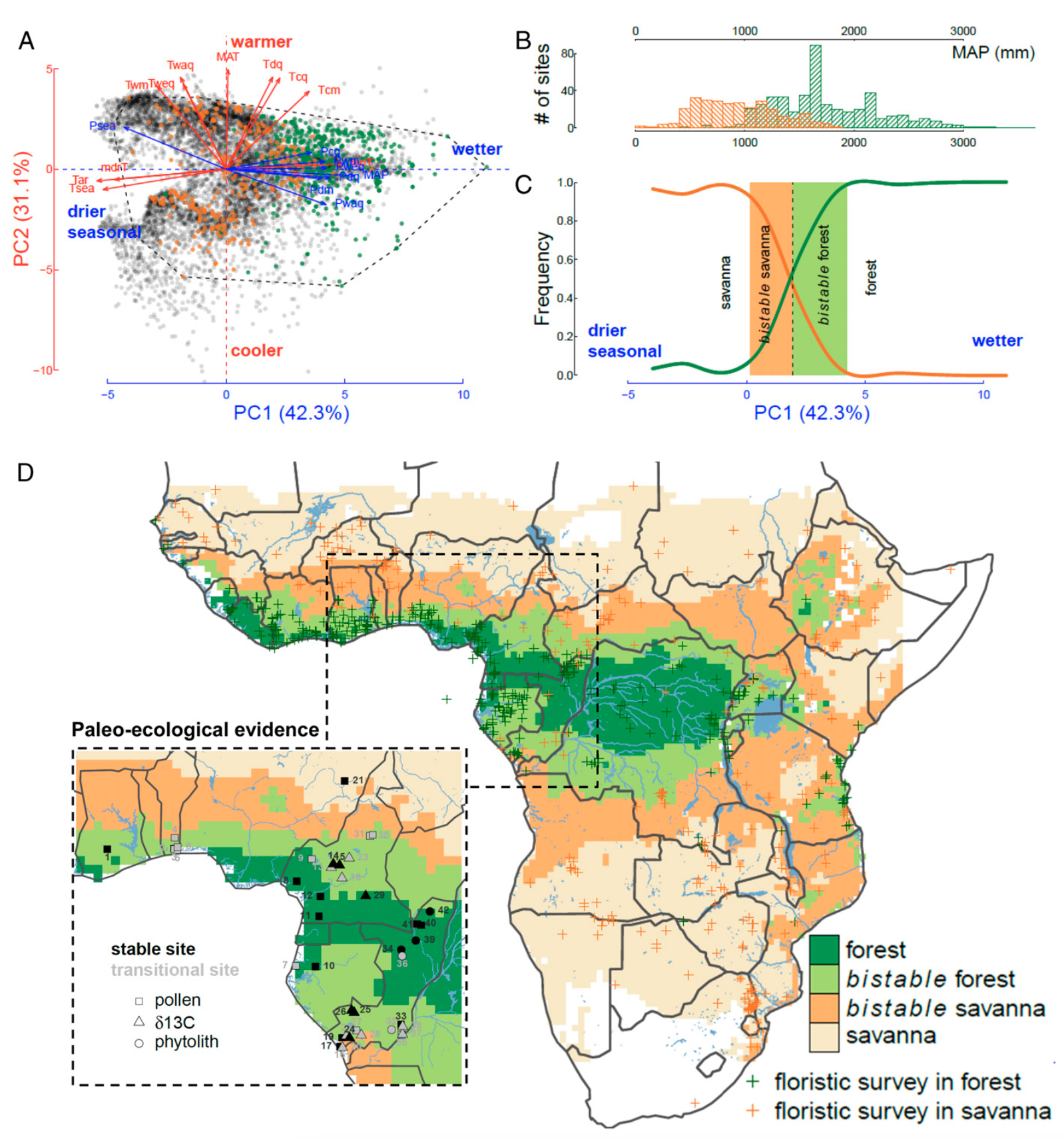
- Precipitation (mm) 🌧️
- Forest to savanna: ~1500mm
- Savanna to forest: >2000mm
- Savanna to treeless: ~500mm
Known tipping points
Suspected tipping points
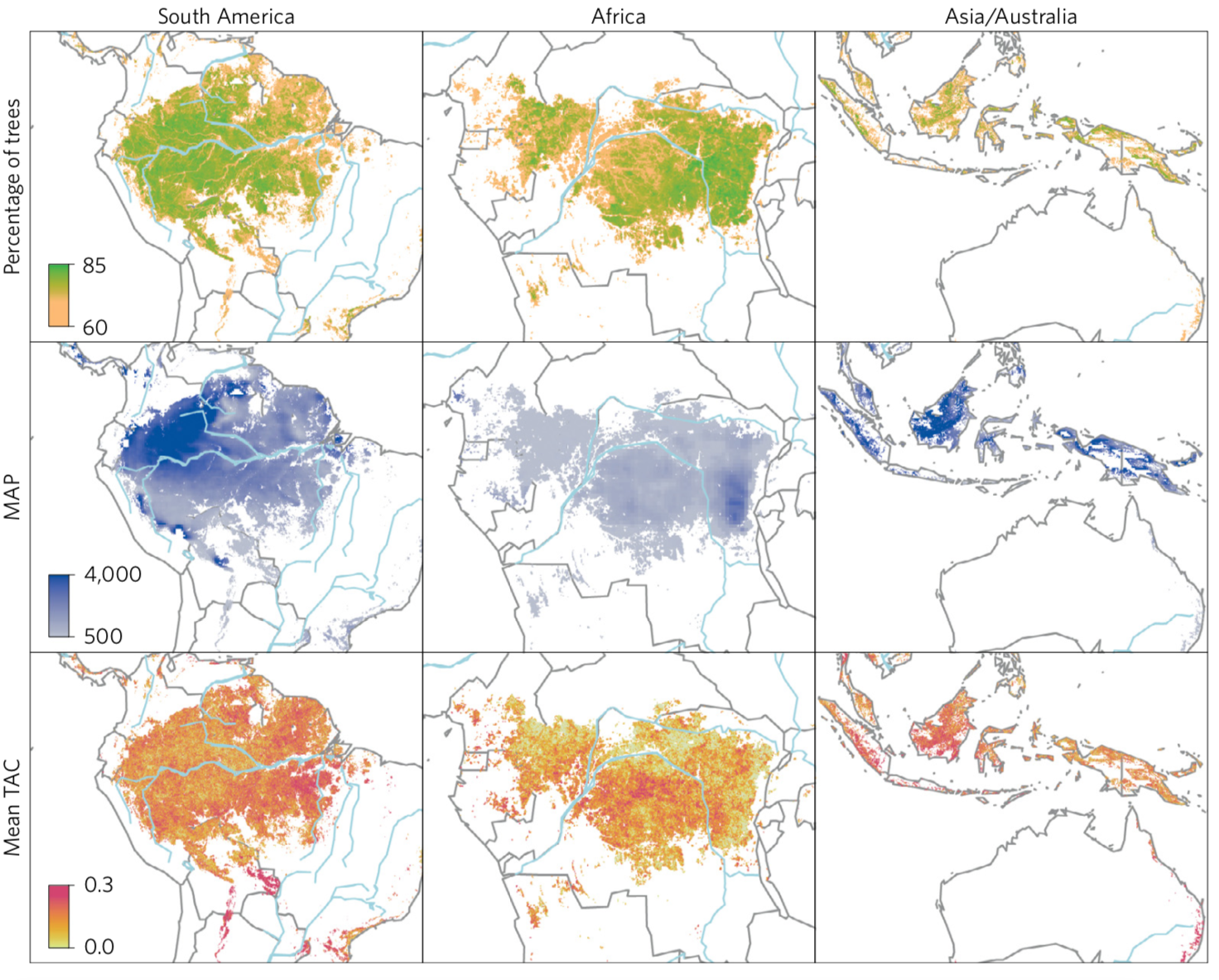

Nobre et al 2016 PNAS
Lovejoy & Nobre 2018 Sci Adv
- Deforestation: 40%
- Precautionary: 20-25%
- Current 20%
- Fire frequency?
Challenges of analyzing regime shifts
- Defining regimes and regime shifts is a simplification
- In “reality” often not clear line between regimes
- Depends on criteria of interest
- Identifying drivers and mechanisms is hard
- Systems vary from place to place
- Same system may vary over time
- Social-ecological shifts may be novel
- Novel actors & connections
- How to balance generality and context
Transformations
Most transformations are regime shifts
Require structural change:
- Flows of energy, materials, information, money
- Who has power
- Who makes decisions
- What values are important

Examples: Industrial revolution | French revolution
Transformations
Understanding regime shifts can help understand the barriers and opportunities for transformation:
- How to destabilize existing regimes
- How to navigate the transition
- How to stabilize the new regime
- Path dependency
But theory is not well developed
Summary
- Resilience revisited
- Ability to absorb disturbance
- Ability to adapt and transform
- Regime shifts
- Hysteresis
- Tipping points
- Feedbacks
- Transformations
 Regime Shift Solo
by Angeler and Allen
Gracias | Tack Questions?
email: juan.rocha@su.se